

You finally grew them out. They looked gorgeous and then, just like that, snapped. If you’ve been asking yourself why do my nails break so easily, you’re not alone. Brittle, weak, and peeling nails are one of the most common complaints we hear at the salon, and the good news is: most of the time, there’s a very fixable reason behind it.
Let’s walk through what’s actually going on with your nails, what’s causing the damage, and exactly what you can do to get them strong and healthy again.
Quick Answer: Why Your Nails Keep Breaking
Nails break easily for a handful of very common reasons. Here’s the short version:
- Moisture imbalance – nails that are too dry or too waterlogged both become fragile
- Repeated exposure to water, soap, and cleaning products – strips the natural oils your nails need
- Damage from gel, acrylic, or dip powder – especially from over-filing or improper removal
- Nutritional gaps – low biotin, iron, or protein means weaker keratin production
- Aging – keratin production naturally slows over time, making nails thinner and more brittle
If any of these sound familiar, keep reading. The fix is closer than you think.
Signs Your Nails Are Weak, Brittle, or Damaged
Before we dive into solutions, it helps to know what you’re actually dealing with. Brittle nails causes can show up in a few different ways:
- Nails that snap or crack at the tips with very little pressure
- Peeling nails – layers separating and flaking off
- Nails that feel thin, soft, or bend easily
- A rough, ridged, or uneven surface texture
- Splitting vertically from tip to base (a sign of more chronic dryness)
Sound familiar? Most of these symptoms point to a moisture or structural issue and both are very treatable with the right approach.
The Most Common Causes of Nails Breaking Easily
Moisture Imbalance (Too Dry or Too Wet)
Your nails are made of keratin – a protein that needs a delicate balance of hydration to stay flexible and strong. Too little moisture, and they become dry and crack. Too much water exposure, and the nail plate swells and contracts repeatedly until it weakens and peels.
Most experts believe that brittle nails are usually caused by dehydration of the nail plate, either from repetitive cycles of hydration and dehydration related to hand washing, or from exposure to dehydrating chemicals such as those found in nail enamel and cuticle removers. It’s a very common cycle that many of us don’t even realize we’re in.
Frequent Handwashing, Soap, and Sanitizer
Every time you wash your hands or use hand sanitizer, you strip away a little of the natural oil layer protecting your nails. Do that dozens of times a day and over time your nails lose their natural defense – leaving them dry, brittle, and prone to splitting and peeling.
This is especially relevant for healthcare workers, teachers, parents of young kids, or anyone who washes their hands frequently throughout the day. The nails take the hit quietly, until one day they just… give.
Exposure to Harsh Chemicals
Household cleaning products – bleach, dish soap, disinfectants – are hard on nails. So is acetone-based nail polish remover, especially when used frequently without moisturizing afterward.
If you clean without gloves or regularly remove nail polish at home with strong removers, this could easily be what’s weakening your nails. The fix here is simple: gloves for cleaning, and gentler acetone-free remover when possible.
Damage from Gel, Acrylic, or Dip Nails
This one is close to our hearts. We love gel, acrylic, and dip powder as much as you do – but when they’re applied or removed incorrectly, they can thin and damage the natural nail underneath.
The three most common culprits:
- Over-filing – aggressive buffing thins the nail plate over time
- Peeling or picking off gel – this pulls off layers of your actual nail, leaving it thin and weak (nails splitting and peeling after gel removal is almost always from this)
- Back-to-back enhancements without a break – the nail never gets a chance to recover
Weak nails after gel aren’t a sign that gel is bad – they’re usually a sign that the removal process needs to be more gentle and careful.
Diet and Nutritional Deficiencies
Your nails grow from the inside out. If your body isn’t getting enough protein, biotin, iron, or zinc, your nail growth suffers and that shows up as nails that are thin, soft, and break easily.
Biotin supports keratin production, which is the structural foundation of your nails. If your diet is low in eggs, nuts, legumes, and leafy greens, adding a biotin supplement is worth considering.
Aging
As we get older, keratin production naturally slows down. Nails become thinner, drier, and more prone to peeling – even without any external damage. Staying on top of hydration and nutrition becomes even more important as part of a consistent nail care routine.
How to Strengthen Weak Nails: What Actually Works
Ready for the good news? Learning how to strengthen weak nails doesn’t require expensive products – just a few consistent habits.
Moisturize Daily (Especially the Cuticles)
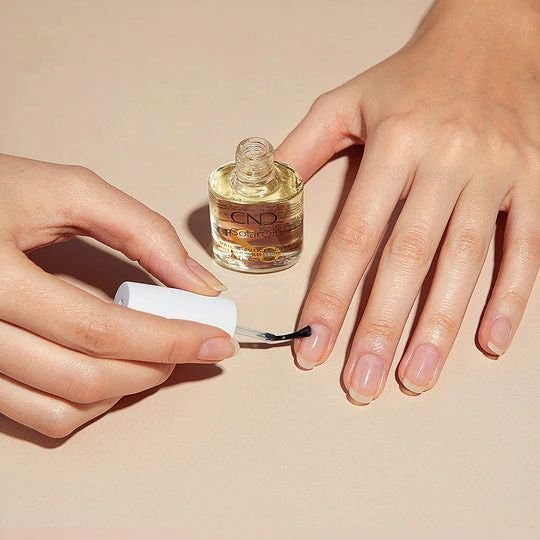
Applying cuticle oil every day is one of the single most effective things you can do for nail health. The cuticle seals moisture into the nail – keeping it hydrated from the base where it grows. Look for oils with jojoba, vitamin E, or almond oil.
Wear Gloves for Cleaning and Dishes
This one is so easy and so often skipped. A pair of rubber gloves while you wash dishes or clean protects your nails from both the chemicals and the repeated wet-dry exposure that weakens them over time.
Switch to a Gentler Removal Method
If you use gel or dip at home, commit to soaking – not peeling. Soak with acetone, wrap in foil, and let the product lift on its own. If you’re not sure how, come in. Proper removal makes a massive difference in how your natural nail recovers.
Keep Nails Short While They Recover
It feels counterintuitive when you’re trying to grow them out, but shorter nails have less leverage and are far less likely to snap during recovery. File them into a rounded or oval shape to prevent corner catches, and let them build strength from a shorter, safer length.
Support Nail Health Through Diet
Feed your nails from the inside:
- Protein (eggs, fish, chicken, lentils) – builds keratin
- Biotin (nuts, seeds, sweet potato, eggs) – supports nail thickness and strength
- Iron (leafy greens, red meat, beans) – helps deliver oxygen to nail cells
- Zinc (pumpkin seeds, chickpeas, whole grains) – supports cell repair and growth
How Long Does It Take for Nails to Recover?
Here’s an honest timeline:
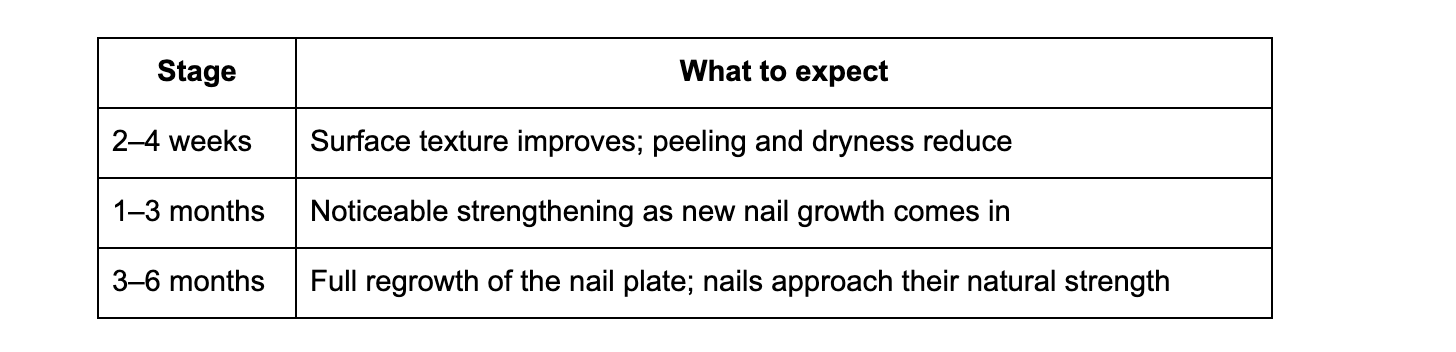
Recovery takes patience. Nails grow about 3mm per month on average – so full restoration means growing out the damaged portion entirely. Be consistent with your care routine and you’ll see steady progress.
When Weak Nails Could Be a Sign of a Bigger Problem
Most of the time, cracked nails and peeling are cosmetic issues with easy fixes. But occasionally, nail changes point to something that needs medical attention. See a doctor if you notice:
- Brittleness that doesn’t improve after months of consistent care
- Unusual color changes – yellow, white, or dark streaks under the nail
- Pain, swelling, or redness around the nail bed
- Nail deformities – pitting, curling, or dramatic thickening
- Sudden dramatic hair loss alongside nail changes
These symptoms can be linked to thyroid conditions, iron deficiency anemia, fungal infections, or skin conditions like psoriasis. A dermatologist can help identify the cause and recommend targeted treatment.
How to Prevent Nails from Breaking Again
Once you’ve healed your nails, keeping them that way comes down to four habits:
- Consistent nail care routine – cuticle oil daily, moisturizer after handwashing
- Proper removal – always soak, never peel gel or dip powder
- Balanced hydration and protection – gloves for chores, gentle products
- Space out enhancements – give your nails a break between sets every few months
Prevention is always easier than repair. Small daily habits make a huge difference over time.
Final Thoughts: Stronger Nails Start with Better Care
If you’ve been frustrated asking why do my nails break so easily, know this: it’s almost always fixable. Brittle nails are your body’s way of telling you something is off – whether that’s your nail care routine, your diet, your products, or how your enhancements are being removed.
The solution isn’t to give up on beautiful nails. It’s to take better care of the ones you have.
Start with the basics – moisturize daily, eat well, protect your hands, and give your nails time to recover. And when you’re ready to come back in for a treatment, we’ll make sure every step is done with your nail health in mind.
And if you have any questions, you can contact us – Magic X Nails & Spa in Mission Viejo, CA. All your questions will be answered immediately.