

Love your gel manicure but dreading the removal process? You’re not alone! At Magic X Nails & Spa in Mission Viejo, clients often ask us about how to remove gel nail polish safely at home. The good news? With the right tools and techniques, you can remove gel polish without damaging your natural nails. Let’s walk through everything you need to know!
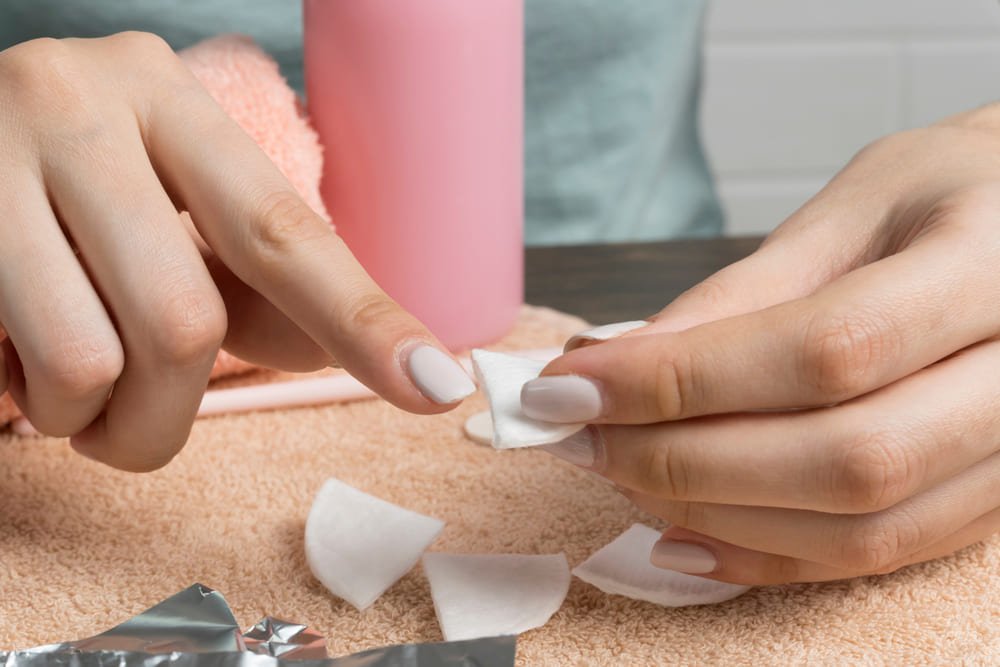
What You’ll Need Before You Start
Essential supplies:
- 100% pure acetone (not regular nail polish remover)
- Cotton balls or pads
- Aluminum foil (cut into 10 small squares) or soak-off clips
- Nail file (180-grit) and buffer
- Wooden or silicone cuticle pusher
- Cuticle oil and hand cream
Optional but helpful:
- Small bowl for warming acetone
- Pre-made acetone wraps
- Gel polish remover gel (acetone alternative)
- Non-acetone gel polish remover for sensitive skin
- Nail strengthening base coat
Quick tip: Never use regular nail polish remover – it won’t break down gel polish effectively!
Prep Steps: How to Prep Nails for Gel Removal
Proper preparation makes removal faster and prevents damage. Follow these steps before starting:
- Trim and shape If your nails have grown long, trim them to a manageable length. This reduces stress during removal.
- Wash and dry thoroughly Clean hands remove oils and dirt that could interfere with acetone penetration.
- Apply protective barrier Rub cuticle oil or petroleum jelly around your nail edges and cuticles. This protects your skin from acetone’s drying effects.
- Break the seal (crucial step!) Use your nail file for gel polish to gently buff away the shiny top coat. This step is absolutely essential – it allows acetone to penetrate the gel layers beneath. Without it, removal takes much longer and risks damage.
Safety reminders:
- Work in a well-ventilated area (open windows)
- Keep acetone away from open flames
- Avoid getting acetone on surrounding skin
Method 1: Acetone Soak Removal (Fastest & Most Effective)
This traditional acetone soak method remains the most reliable way to remove gel polish at home.
Step-by-Step Instructions
- Step 1: File the top layer. Buff away the glossy top coat on all nails until the surface looks dull and matte.
- Step 2: Saturate cotton pads. Soak cotton balls or pads thoroughly with 100% acetone. They should be wet but not dripping.
- Step 3: Apply to nails. Place one saturated cotton pad directly onto each nail, covering the entire nail surface.
- Step 4: Wrap securely. Wrap each fingertip with aluminum foil or use soak-off clips to hold cotton in place. Make sure wraps are snug.
- Step 5: Wait patiently. Set a timer for 10-15 minutes. Resist the urge to peek early – patience prevents damage!
- Step 6: Remove and scrape gently. Remove foil from one nail. Use a wooden cuticle pusher to gently scrape softened gel toward the free edge. It should slide off easily.
- Step 7: Buff lightly. Use a gentle buffer to smooth any remaining residue. Don’t over-file your natural nail.
- Step 8: Moisturize immediately. Apply cuticle oil and hand cream generously. Massage into nails and surrounding skin.
How Long Should Gel Polish Soak?
Typical timing: 10-15 minutes for most gel polishes
Signs gel is ready to remove:
- Polish looks wrinkled or bubbled
- Edges lift easily when gently pushed
- Color appears faded or whitish
If gel isn’t loosening:
- Rewrap for another 5 minutes
- Check that you filed the top coat adequately
- Ensure cotton stayed saturated (add more acetone if needed)
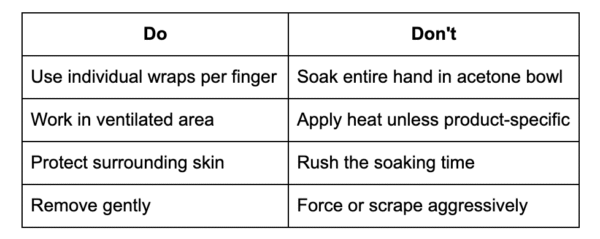
Safety Tips
Method 2: Using a Gel Polish Remover (No Foil Needed)
How This Method Works
Specialized gel polish removers contain acetone plus conditioning agents that break down gel while protecting nails. They’re often easier to use than traditional soaking.
When this method works best:
- You have sensitive skin
- You want less mess
- You’re removing thin gel layers
- You prefer convenience over speed
Steps
- File the top coat. Just like Method 1, remove the shiny seal completely.
- Apply remover gel. Apply a thick layer of gel polish remover to each nail, covering completely.
- Wait 5-8 minutes. Follow product-specific timing. Most work faster than traditional acetone.
- Push off gel gently. Use your cuticle pusher to remove softened gel. It should come off in sheets.
- Moisturize thoroughly. Finish with cuticle oil and hand cream to restore moisture.
Method 3: How to Remove Gel Polish Without Acetone
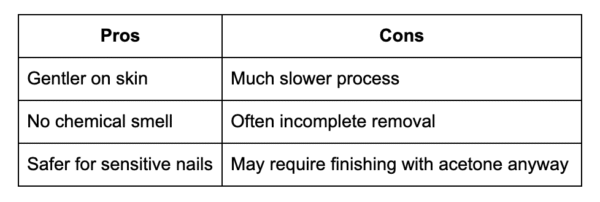
Some people prefer non-acetone gel polish remover options, though they’re generally less effective.
Warm Water + Soap + Oil Soak
Process:
- Fill a bowl with warm (not hot) water
- Add dish soap and a few drops of oil
- Soak nails for 20-30 minutes
- Gently push gel edges with cuticle stick
- Repeat as needed
Reality check: This method works only for very thin gel or gel that’s already lifting. It’s slow and often incomplete.
Filing-Only Method (Emergency Use Only)
Gently file gel polish away with a fine-grit file. This is time-consuming and risks damaging your natural nail if you’re not extremely careful. We don’t recommend it except in emergencies.
Pros and cons of acetone-free methods:
Troubleshooting: Why Your Gel Polish Won’t Come Off
Problem: Gel stays stubbornly in place
Common causes and solutions:
- Didn’t file enough → Buff more aggressively to break the seal
- Too many gel layers → Extend soaking time to 20 minutes
- Using regular nail polish remover → Switch to 100% acetone
- It’s hard gel, not soft gel → Hard gel requires professional filing; it won’t soak off
- Cold acetone → Warm acetone slightly by placing closed bottle in warm water (not hot!)
What NOT to Do
These mistakes cause the nail damage you’re trying to avoid:
❌ Peeling or picking: This removes layers of your natural nail along with the gel. Never pick at gel polish!
❌ Using an electric drill at home: E-files require professional training. Improper use causes serious nail damage.
❌ Over-filing natural nails: File only the gel polish, not your nail plate underneath.
❌ Soaking hands directly in acetone: This excessively dries skin and increases chemical exposure. Always use cotton wraps.
❌ Rushing the process: Impatience leads to aggressive scraping and damage. Give acetone time to work.
❌ Using sharp metal tools aggressively: Metal cuticle pushers can gouge your nail plate. Use wooden or silicone tools with gentle pressure.
Aftercare: How to Heal, Strengthen & Restore Nails
Your nails need TLC after acetone exposure. Follow this nail care after gel removal routine:
Daily cuticle oil routine: Apply cuticle oil 2-3 times daily for the first week. This replenishes lost moisture and prevents peeling.
Moisturizing tips:
- Use hand cream every time you wash hands
- Apply thick cream before bed and wear cotton gloves overnight
- Choose products with vitamin E, jojoba oil, or shea butter
Strengthen with treatments:
- Keratin treatments rebuild nail structure
- Builder base coats add protective layers
- Protein-rich nail serums promote healthy growth
Recommended nail break: Give nails a 1-2 week break between gel applications. This allows them to breathe and recover.
Prevent post-acetone dryness:
- Drink plenty of water
- Take biotin supplements
- Avoid harsh soaps and sanitizers
- Wear gloves for cleaning tasks
Prevention Tips: Make Future Gel Removal Easier
Smart application habits:
- Use a peel-off base coat – Some brands allow gel to pop off without acetone
- Don’t apply gel too close to cuticles – Leave a tiny gap; it prevents lifting and makes removal easier
- Avoid thick layers – Thin, even coats soak off faster and look better
- Choose soak-off gels – Check labels; avoid hard builder gels for home use
Final Tips for Safe, Damage-Free Removal
When to Visit a Salon Instead
Visit Magic X Nails & Spa if:
- You have hard gel or builder gel extensions
- Gel won’t budge after multiple attempts
- Your nails show signs of damage or infection
- You’re unsure about the removal process
- You want professional nail treatments afterward
Best Practices for Sensitive Skin
- Use acetone-free alternatives when possible
- Apply extra barrier cream around nails
- Reduce soak time to 10 minutes
- Choose gel polishes marketed as “gentle removal”
Time-Saving Shortcuts
- File top coat while watching TV to save time
- Prep all supplies before starting
- Use pre-soaked acetone wraps for convenience
- Work on one hand at a time for better control
How to Prevent Future Nail Damage
Long-term nail health:
- Rotate between gel and regular polish
- Never skip base coat
- Keep nails properly hydrated
- Visit professionals for complex services
Ready for Healthy, Beautiful Nails?
Now you know how to remove gel nail polish safely and effectively at home! Whether you choose the traditional acetone soak method, convenient gel polish remover, or gentler non-acetone gel polish remover, the key is patience and proper technique.
Remember: healthy nails are beautiful nails. Taking time to remove gel properly prevents damage and keeps your nails strong for future manicures.
At Magic X Nails & Spa in Mission Viejo, we’re always here to help with safe gel polish removal and professional nail care. Whether you need expert removal, nail strengthening treatments, or your next gorgeous gel manicure, our team has you covered.
Need professional help? Contact Magic X Nails & Spa today for expert gel removal and nail restoration services. Your nails deserve the best care!